

Software that can understand visual environments.
We engineer computer vision into products and workflows that need to detect, track, interpret or transform visual information. That includes the processing pipeline around the model—not only the inference step.
Engineering the full system around the intelligence.
Object detection
Identify relevant objects, regions and visual features within images or video.
Tracking
Maintain object identity and position across frames for downstream visual workflows.
Scene understanding
Interpret surfaces, context and spatial relationships required by the application.
Video processing
Build asynchronous pipelines for analysis, transformation, rendering and export.
Model orchestration
Combine multiple visual or generative models where a single inference stage is insufficient.
Production infrastructure
Design compute, storage, queues and processing architecture around visual workloads.
From input to operational outcome.
AI becomes useful when it is connected to the information, software, controls and actions around it. We engineer that path as one production system.
Applied to work that benefits from intelligence.
The use case determines the architecture. We start with the work being performed and decide where AI, deterministic software and human judgment each belong.
AI video placement
Track surfaces and visual context to support environment-aware branded content workflows.
Visual analysis
Turn images or video into structured signals that applications can reason over.
Automated processing
Coordinate model inference with queues, rendering, storage and export.
Recognition workflows
Use visual intelligence as one component inside a broader digital product or operational system.
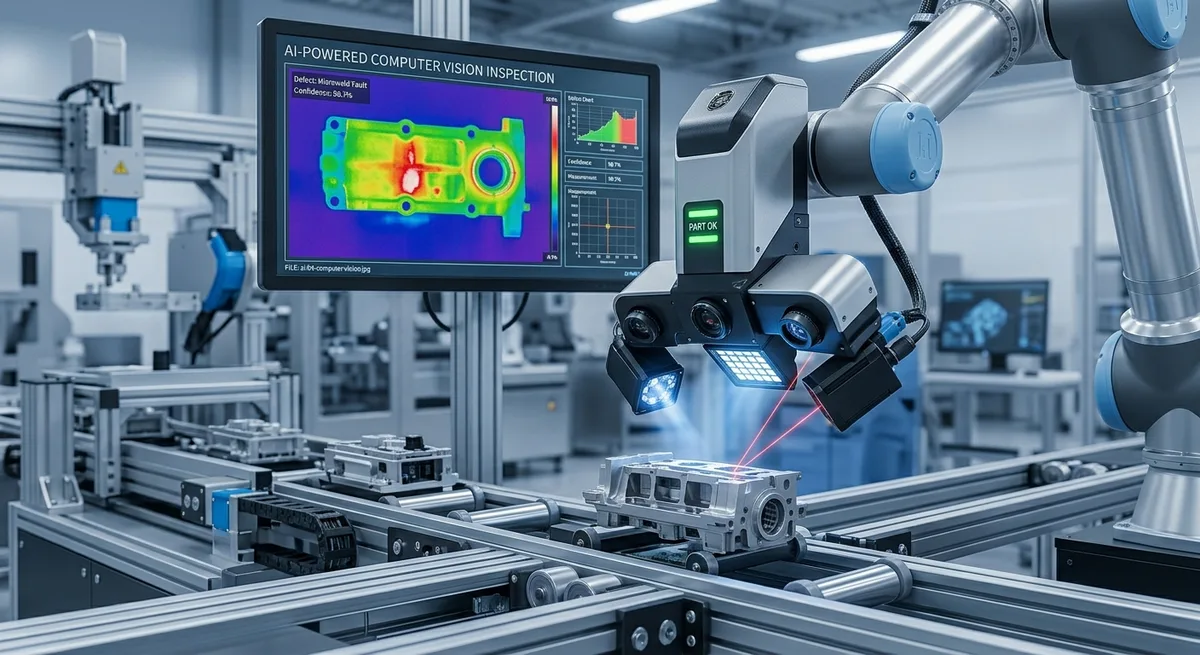
Computer vision extends beyond model inference.
Video and image systems also depend on frame pipelines, storage, compute scheduling, tracking state, rendering and application workflows. We engineer those pieces as one system.
Explore Digital Engineering